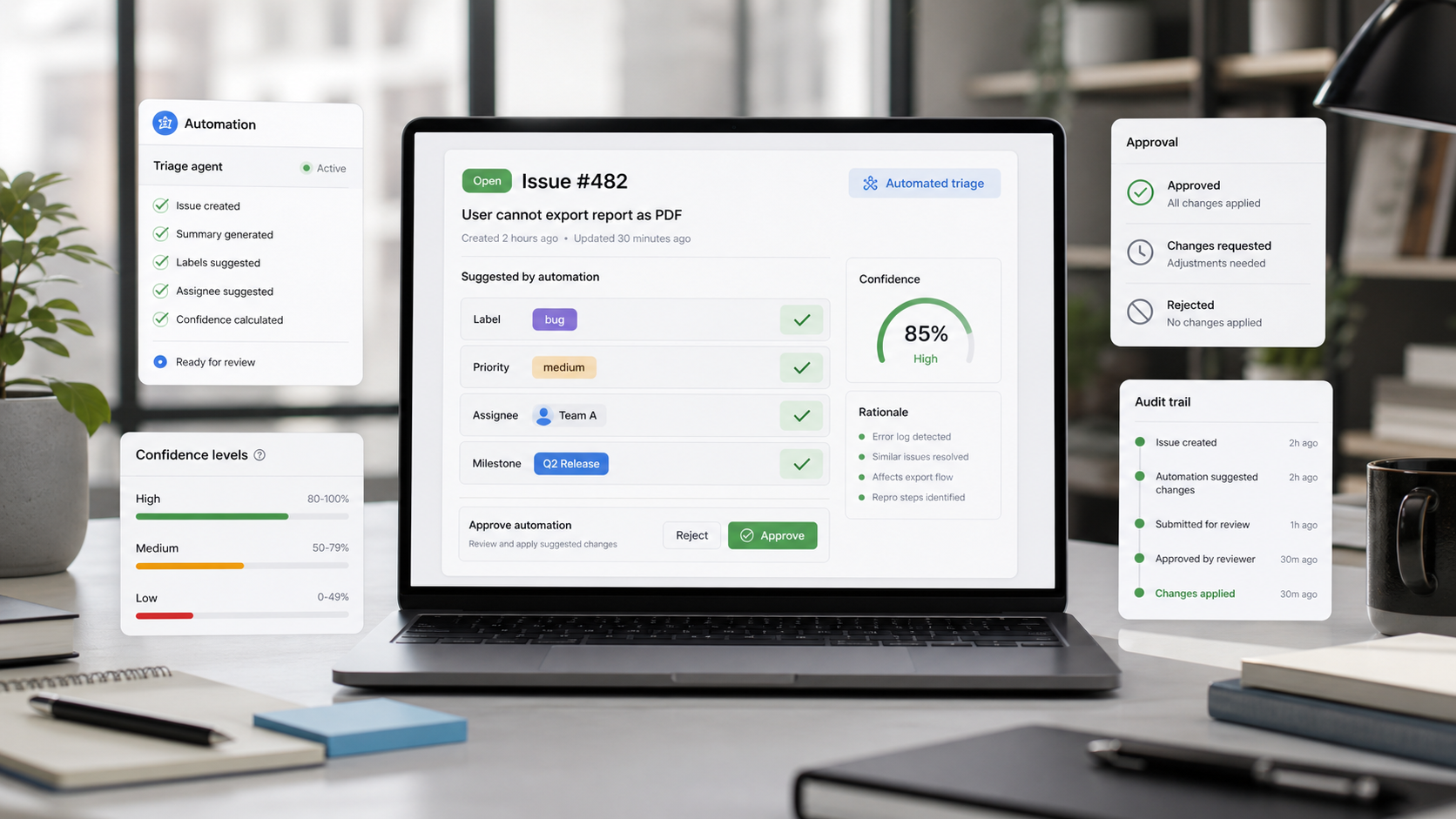
GitHub Issues added public-preview controls that make agent-driven triage easier to inspect. Instead of accepting every automated label, assignment, field change, or close action as a black box, teams can see why the agent made a suggestion and decide whether it should apply.
The July 23 announcement introduces three related concepts: approvals for suggested changes, confidence ratings for supported actions, and rationale attached to the change. Repository admins can configure automation levels so higher-confidence actions can apply while uncertain ones wait for review.
WHERE IT HELPS
The feature is most useful for repositories with high issue volume. Triage queues often fail because labels, ownership, and priority fields lag behind the conversation. Agents can help with that housekeeping, but only if maintainers can understand what changed.
A good first use case is metadata enrichment: classify new issues, add likely product areas, and suggest assignees. Spam detection is another useful fit because uncertain cases can be held for human review instead of being closed too aggressively.
- Use suggestions for public repositories where incorrect closures damage trust.
- Allow automatic high-confidence labels only after checking historical accuracy.
- Review rationale during weekly triage to improve prompts and rules.
DO NOT TREAT IT AS A SECURITY BOUNDARY
GitHub is explicit that approvals are not a server-side security control. An agent with permission to change an issue can still apply changes directly if instructed to do so. That means the control should be treated as workflow governance, not access control.
Teams should still manage repository permissions, agent credentials, and automation configuration separately. The new interface helps humans stay in the loop, but it does not replace least-privilege setup.
ROLLOUT ADVICE
Start in suggestion mode on a small set of repositories. Track how many suggestions are accepted, edited, or rejected, then tighten the confidence threshold only where the automation is consistently right.
The safest automation is boring: repeatable labels, known issue types, and routing to clear owner groups. Avoid letting a new agent close ambiguous product feedback until maintainers trust its judgement.
BOTTOM LINE
GitHub is moving issue automation toward explainable assistance instead of invisible changes. That is the right direction for teams that want agent speed without losing maintainers control over project hygiene.