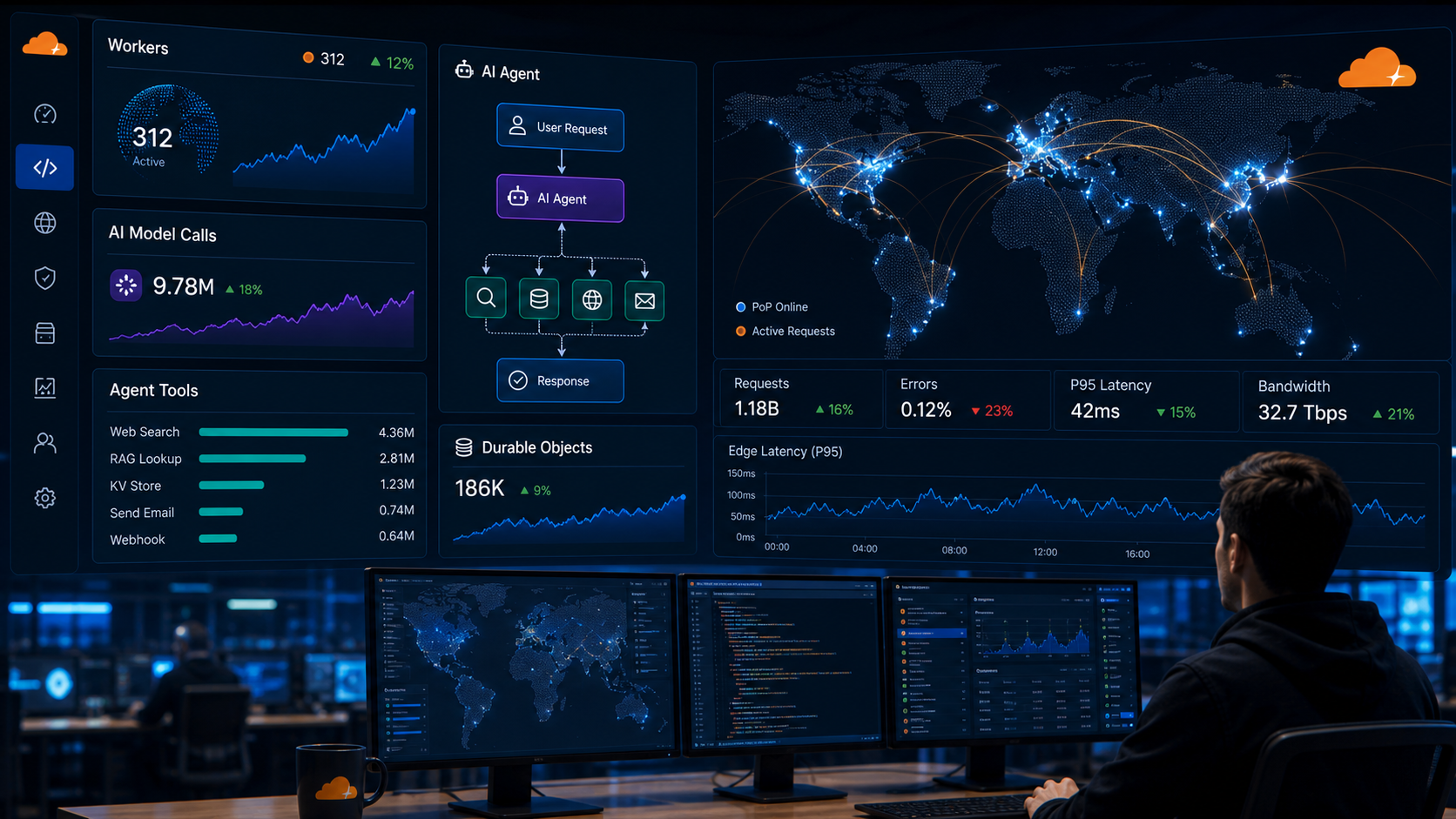
Cloudflare has opened a second non-profit startup cohort under its Cloudflare Impact program, offering participating organizations up to $250,000 in credits for its developer services. The company notes that the first cohort included 30 organizations and that the program overall has awarded more than $7.5 million in Cloudflare credits to civil-society projects.
WHAT THE FIRST COHORT BUILT AND WHY IT MATTERS
The initial cohort highlighted a range of automation projects aimed at supporting civil society in climate science, humanitarian aid, mental health, civic engagement, and education. These tools demonstrate how AI-enabled workflows can be built securely and affordably on Cloudflare’s platform, with the aim of making advanced capabilities accessible to groups that may lack large IT budgets. TechStaged has also covered Cloudflare AI Gateway Observability and Cost Controls.
CONCRETE DEPLOYMENTS: REAL-WORLD EXAMPLES
LebTown, a local newsroom, moved from a two-Google-Docs workflow to a custom editorial-management system that tracks pitches, publication, audience reach, and community impact. Kaya Guides built a WhatsApp-based mental health service in India that has served thousands and now handles hundreds of thousands of messages monthly, with live AI-assisted guidance for counselors. The Snorkelling Society developed SnorkelMap to help people discover snorkeling sites and to support community-contributed content while maintaining secure storage for user data and media.
SECURITY, PRIVACY AND SCALED IMPACT ACROSS CIVIL SOCIETY
Cloudflare emphasizes that its developer services include security and privacy protections from the outset, and that operating on a global network helps guard against threats such as DDoS and unauthorized access. The company highlights that its lightweight, serverless architecture scales with demand, and that AI-specific tools (Workers AI and AI Gateway) help manage costs through rate limiting, observability, and efficient model usage.
BROADER CONTEXT: CHALLENGES AND GOVERNANCE
As civil-society groups face financial strain and privacy concerns, Cloudflare notes that these factors can hinder adoption of automation. A CIVICUS survey cited by Cloudflare indicates privacy concerns as a barrier for more than half of civil-society respondents, and about 48% cited financial constraints. In this environment, collaborations with industry partners and volunteer engineers were launched to help design secure, responsible AI workflows for public-interest work.
WHAT HAPPENS NEXT? OPPORTUNITIES TO JOIN THE SECOND COHORT
Cloudflare says the startup program is now open to a second cohort of non-profit organizations. Interested groups are invited to apply and select the non-profit checkbox to participate. The company frames this as part of a broader effort to ensure civil-society actors are among the first to benefit from AI-enabled automation on its platform.
RELATED COVERAGE
SOURCES
- Cloudflare Blog: Building for good: How civil society organizations are automating on Cloudflare Published · Primary source