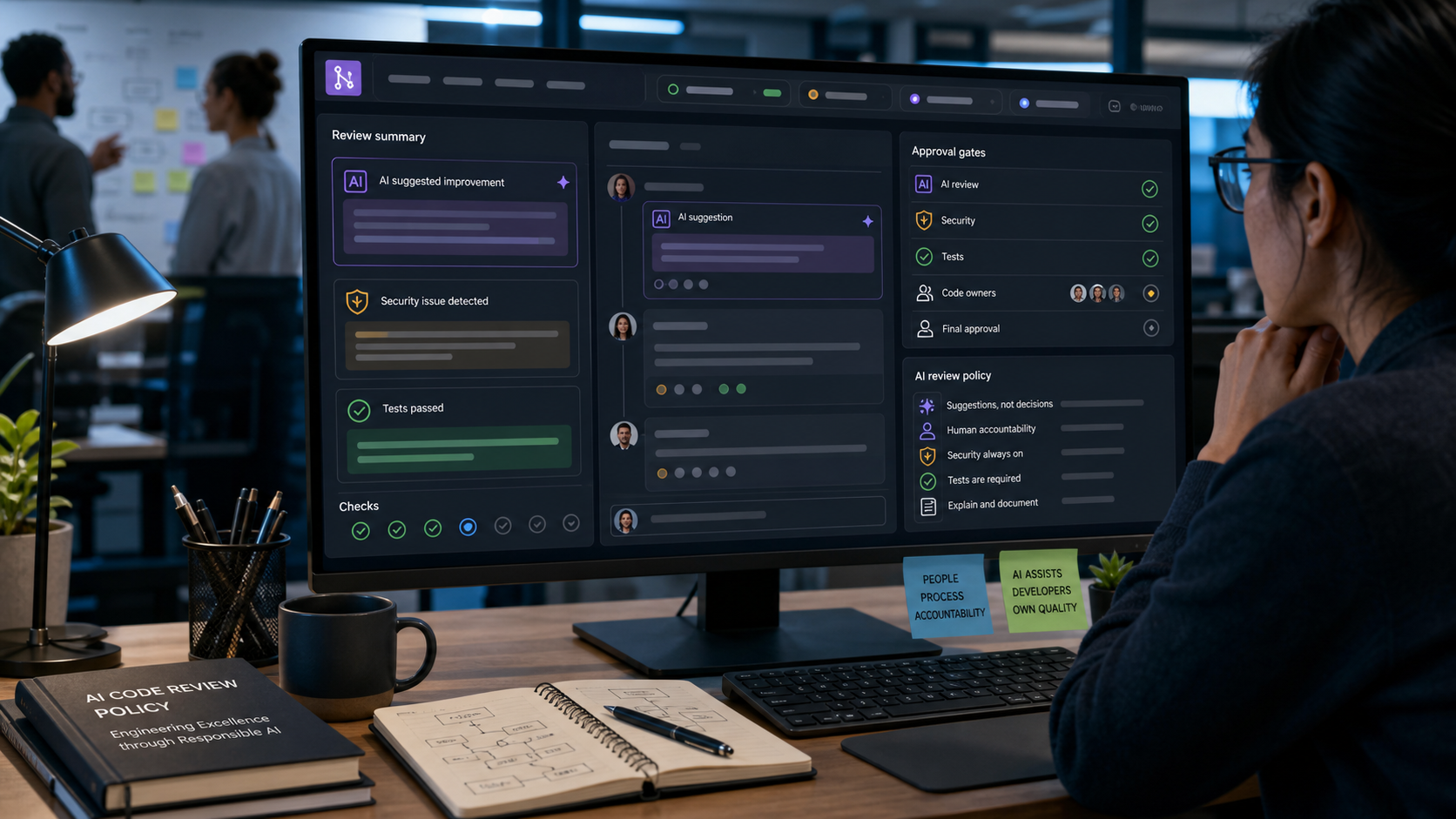
AI code review assistants can point out defects, summarize pull requests, and suggest changes. The policy question is who remains responsible for the code after an AI suggestion is accepted.
Engineering teams should define how AI feedback interacts with tests, security checks, code owners, and protected branches.
WHY IT MATTERS
A good policy can speed review while preserving quality expectations. It also reduces ambiguity when AI suggestions conflict with local architecture or security requirements.
The goal is not to block AI use. The goal is to make AI-assisted review auditable and aligned with engineering standards.
IMPLEMENTATION CHECKLIST
Write the code review policy before making AI review a required workflow.
- Define which repositories and pull requests can use AI review.
- Require humans to approve accepted suggestions and final merges.
- Keep security, test, lint, and code owner checks authoritative.
- Document how risky suggestions are escalated or rejected.
- Review accepted AI suggestions during retrospectives when defects escape.
RISKS AND TRADEOFFS
The main risk is automation bias. Developers may accept confident suggestions that are wrong for the codebase.
The tradeoff is review speed. AI can reduce toil, but teams still need experienced reviewers for architecture, security, and product judgement.
BOTTOM LINE
AI code review should make human reviewers more effective. Keep ownership, tests, and security gates explicit.