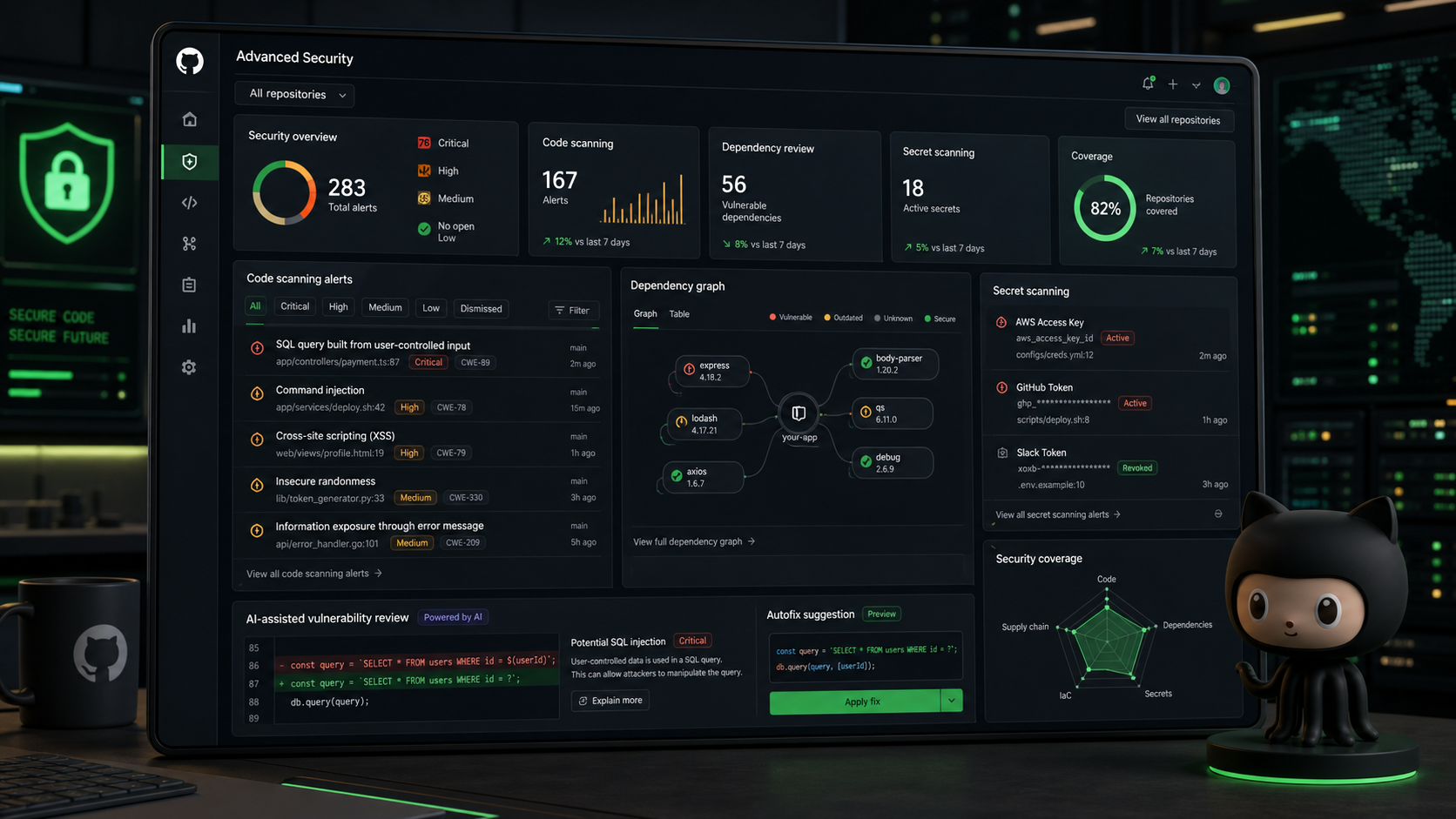
GitHub code scanning and CodeQL can find vulnerabilities and code-quality issues, but a successful rollout depends on workflow design. Turning on alerts everywhere without owners can create noise and slow pull requests.
Start with repositories that represent the main languages and deployment paths. Use the pilot to decide how alerts are assigned, which findings block merges, and which results need security-team review.
WHY IT MATTERS
Code scanning works best when developers see findings while the context is still fresh. Pull request integration can reduce late security review, but only if alerts are understandable and actionable.
Security leaders also get better visibility. Coverage by language, repository, severity, and age can become a program metric instead of a periodic manual audit.
SELECTION CHECKLIST
Use the pilot phase to create rules the broader engineering team can actually follow.
- Select pilot repositories by language, risk, and deployment criticality.
- Define alert ownership for application, platform, and security teams.
- Set severity thresholds before enabling merge protection.
- Document false-positive handling and dismissal permissions.
- Review remediation time and coverage before expanding organization-wide.
RISKS AND TRADEOFFS
Too many findings can make developers ignore the tool. Teams should tune configurations and introduce blocking rules gradually.
The opposite risk is under-enforcement. If high-severity findings never affect release decisions, code scanning becomes a dashboard instead of a control.
BOTTOM LINE
Code scanning is an engineering workflow, not only a security tool. Start narrow, define owners, tune noise, and make enforcement predictable.