Project management tools make dashboards easy to build, but easy dashboards are not always useful. A board full of completed tasks can still hide delayed decisions, scope risk, unclear ownership, or customer impact.
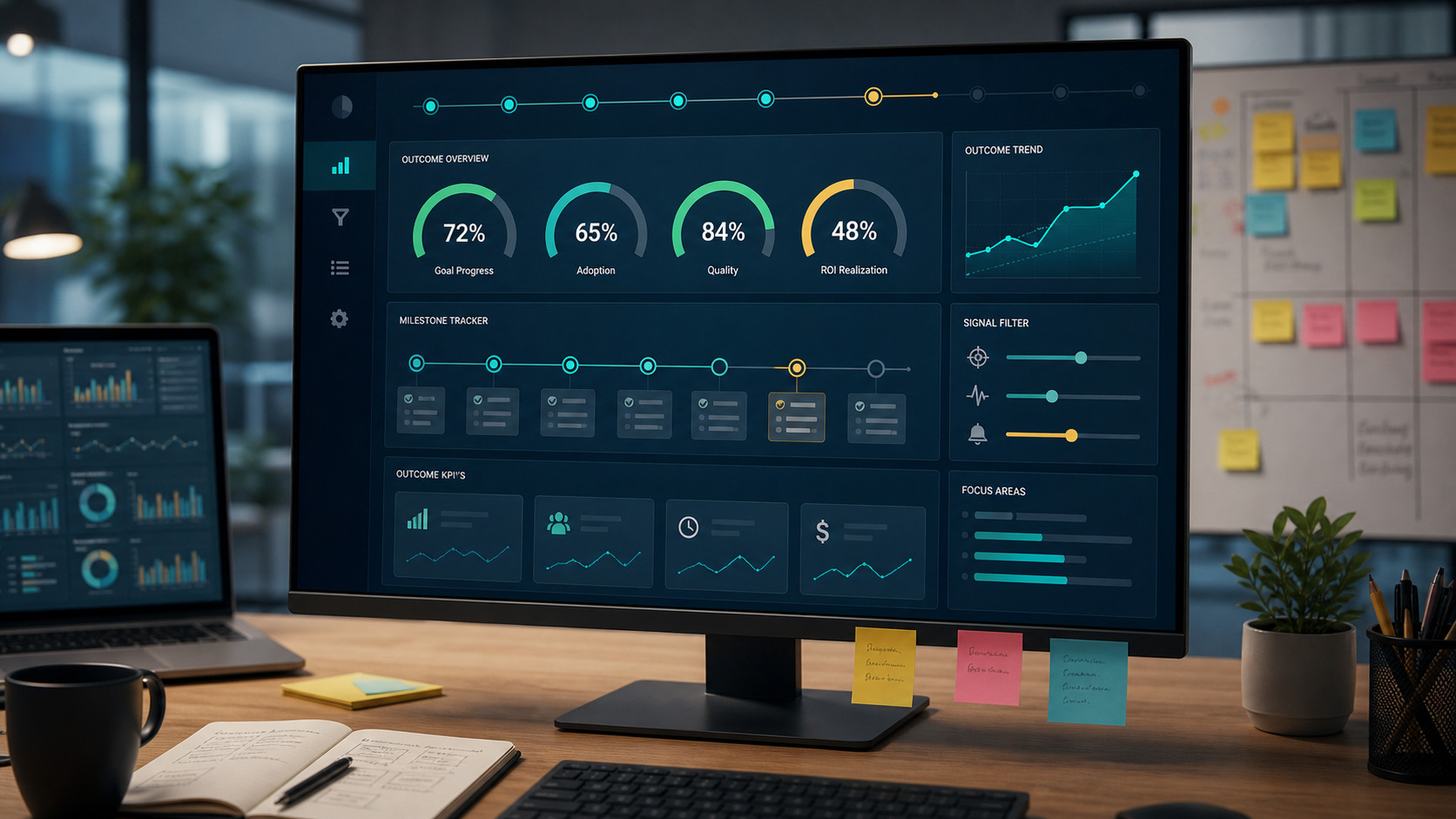
The best dashboards answer specific management questions: are we on track, what changed, who owns the next decision, and what outcome is at risk?
WHY IT MATTERS
Outcome-focused dashboards reduce status meetings and help teams respond earlier. They also make project data useful to leaders who do not need every task detail.
For teams using tools such as Asana, ClickUp, or monday.com, dashboard quality depends on field discipline. Reports are only as good as the underlying statuses, owners, and dates.
SELECTION CHECKLIST
Choose dashboard metrics that lead to decisions instead of passive observation.
- Track outcome, owner, due date, risk, blocker, and next decision for each project.
- Measure cycle time and aging work where delays repeatedly happen.
- Separate executive summary views from operational queue views.
- Show changed status since the last review, not only current totals.
- Retire metrics nobody uses to make decisions.
RISKS AND TRADEOFFS
The main risk is dashboard theater. Teams can spend more time maintaining metrics than using them to improve work.
The tradeoff is simplicity. A dashboard with fewer but trusted metrics is usually better than a dense control panel nobody believes.
BOTTOM LINE
Project dashboards should make decisions easier. Track outcomes, owners, risks, and blockers before adding more activity charts.