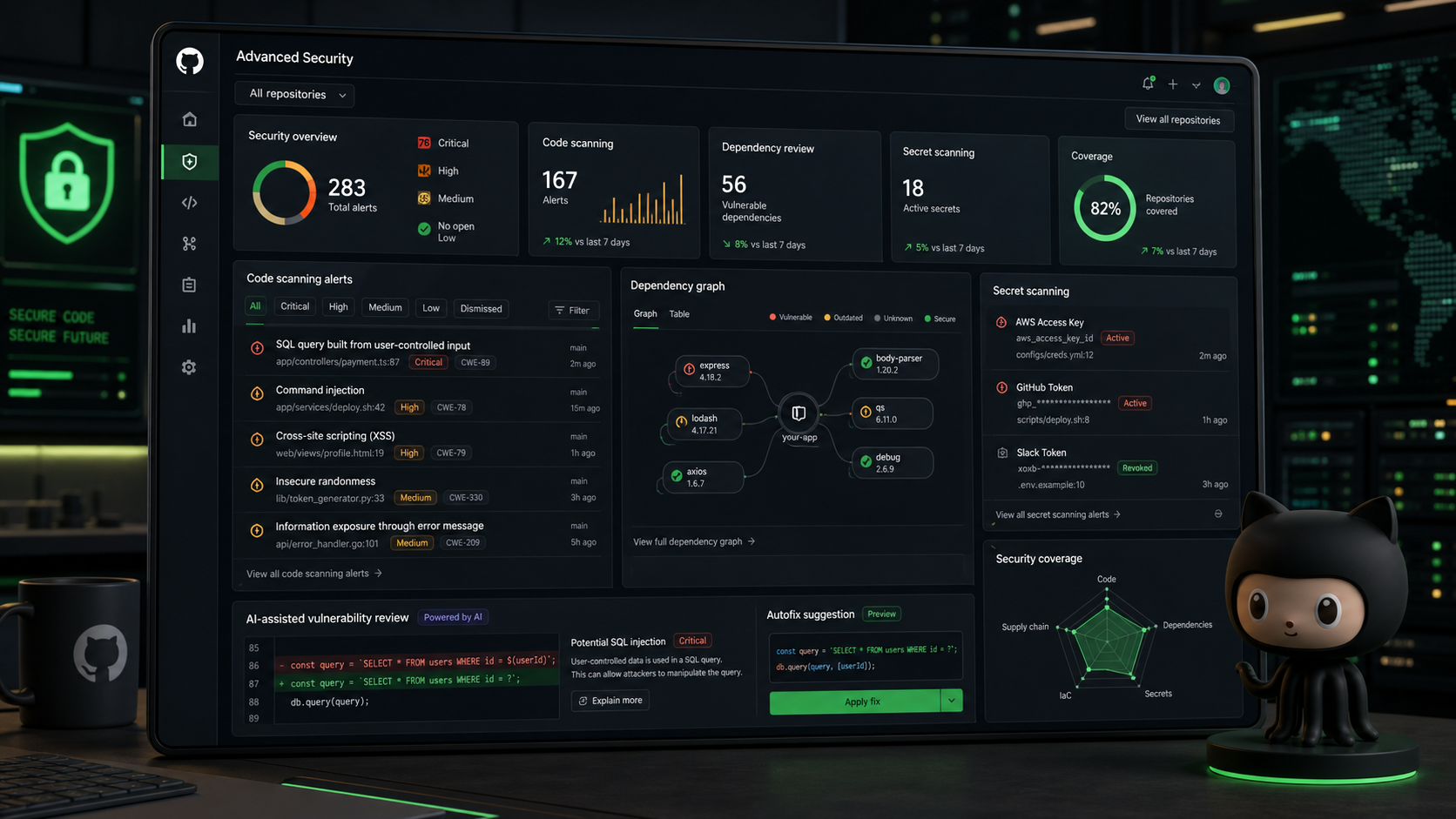
GitHub announced public-preview AI security detections for code scanning. The feature is intended to identify potential issues in languages and frameworks not fully covered by CodeQL, label AI findings separately, and return results within the pull-request review workflow.
TechStaged reviewed the company announcement and relevant reporting, then built this article as original analysis for readers who need to understand the operational impact rather than repeat a launch checklist.
WHY IT MATTERS
Security tools lose value when developers do not see findings until after code merges. Pull-request placement improves timing and visibility, while broader language coverage can reduce blind spots in modern stacks. The tradeoff is that probabilistic findings can add noise or create review fatigue.
The broader shift is that technology decisions now affect budgets, permissions, customer expectations, and team habits at the same time. A useful evaluation therefore considers the full workflow, not only the headline feature.
WHAT TEAMS SHOULD CHECK
Before adopting the update, convert the news into a small implementation brief with an owner, a test case, and a rollback plan.
- Enable the feature for a pilot organization with CodeQL default setup and a known security review process.
- Label AI findings separately and measure precision, remediation rate, and developer trust.
- Keep deterministic scanners, tests, and manual review as separate evidence sources.
- Define which findings block merges and which create follow-up work after the preview period.
- Review AI-generated security comments for sensitive code exposure and unnecessary data sharing.
RISKS AND TRADEOFFS
AI security detection can broaden coverage without proving that every alert is correct. Treating preview findings as automatic merge blockers could slow teams or encourage people to ignore the entire queue.
A narrow pilot is usually the fastest way to expose those tradeoffs. Start with a workflow where the data, approval path, and success metric are clear, then expand only after the team can explain both the gains and the failure modes.
BOTTOM LINE
GitHub’s AI detections are useful as an additional review layer. Teams should measure signal quality before changing release policy and keep high-confidence controls deterministic.