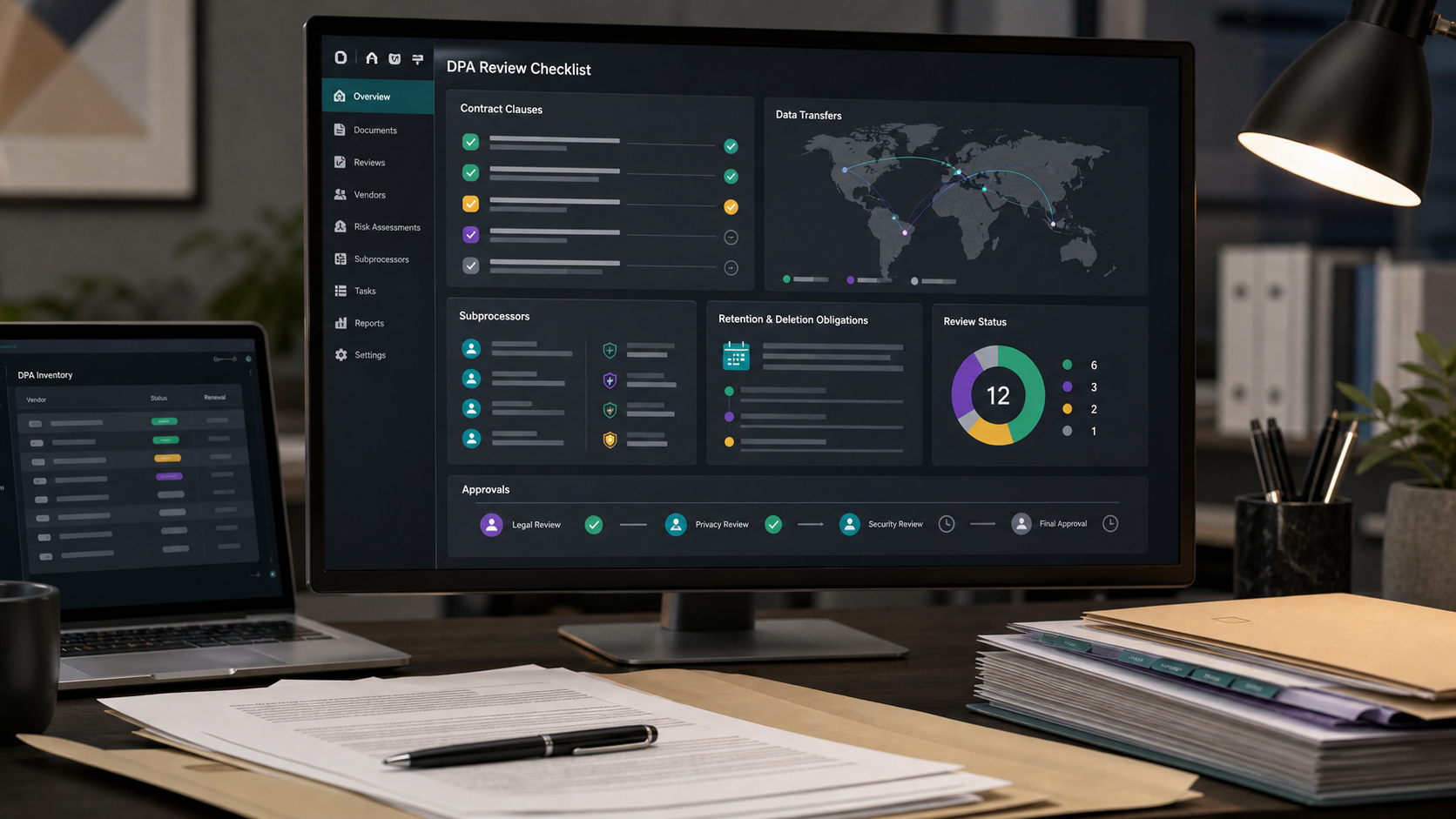
A data processing agreement describes how a vendor handles personal data on behalf of a customer. For SaaS buyers, the review should focus on what data enters the product and what operational promises the vendor makes.
This is not only a legal document. It can affect configuration, data retention, deletion workflows, vendor lists, and breach response.
WHY IT MATTERS
A careful review helps teams understand where personal data goes and what happens if the contract ends or an incident occurs.
The practical value is translating clauses into tasks: retention settings, admin permissions, deletion requests, and vendor-monitoring reminders.
IMPLEMENTATION CHECKLIST
Review the DPA alongside the technical implementation plan.
- Confirm controller, processor, service provider, or equivalent role language.
- Review categories of data, purpose, subprocessors, and transfer locations.
- Check deletion, return, retention, and backup handling after termination.
- Review incident notice, audit rights, assistance, and support obligations.
- Assign internal owners for any post-signing operational requirements.
RISKS AND TRADEOFFS
The main risk is signing terms that the team cannot operationalize. A deletion promise is weak if nobody knows where duplicated exports live.
The tradeoff is legal complexity. Small teams should keep review focused on the actual data and systems involved.
BOTTOM LINE
A DPA is useful when the contract terms match real data flows and operational ownership.