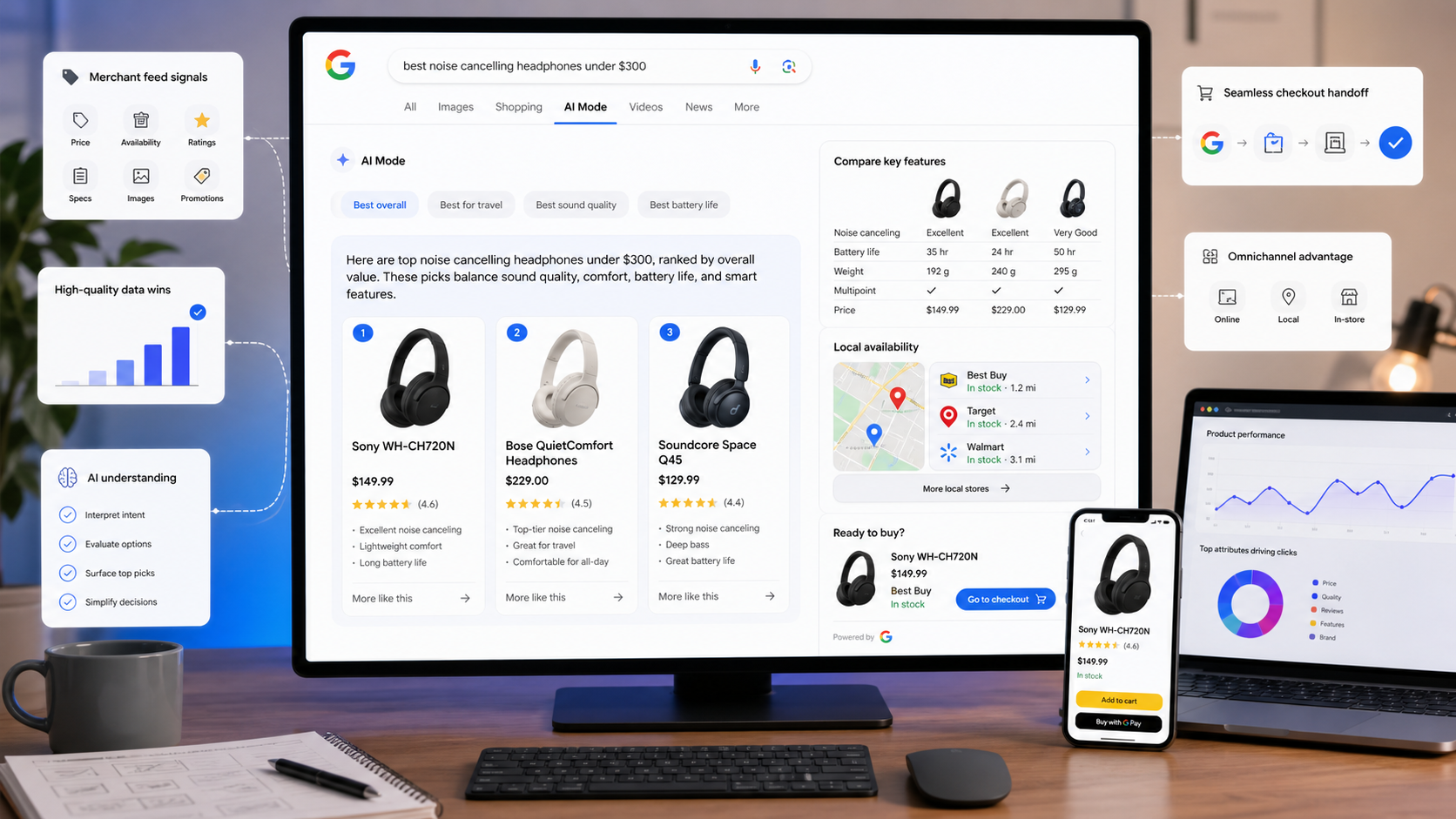
Walmart and Google announced plans to make Walmart and Sam’s Club assortment, value, and convenience available through Gemini using the Universal Commerce Protocol. The companies describe a journey where Gemini can surface products and Walmart’s commerce experience can help complete the purchase.
TechStaged reviewed the company announcement and relevant reporting, then built this article as original analysis for readers who need to understand the operational impact rather than repeat a launch checklist.
WHY IT MATTERS
Retail search is moving from a list of links toward a conversation about needs, constraints, and a complete basket. Walmart has the inventory, fulfillment, and merchandising context, while Google owns a major discovery surface. The partnership combines those strengths but also changes where the customer relationship begins.
The broader shift is that technology decisions now affect budgets, permissions, customer expectations, and team habits at the same time. A useful evaluation therefore considers the full workflow, not only the headline feature.
WHAT TEAMS SHOULD CHECK
Before adopting the update, convert the news into a small implementation brief with an owner, a test case, and a rollback plan.
- Make product, store, delivery, substitution, and membership data accessible and consistently updated.
- Test basket-building prompts that include budget, brand, dietary, delivery, and household constraints.
- Make it clear when a recommendation comes from Walmart, a marketplace seller, or a sponsored placement.
- Design confirmation screens that show the final basket, price, delivery promise, and return policy.
- Track customer retention and basket size, not only clicks from Gemini.
RISKS AND TRADEOFFS
Agentic recommendations can compress comparison and make sponsorship or merchandising influence harder to see. Retailers should preserve transparent product information and a clear final review before purchase.
A narrow pilot is usually the fastest way to expose those tradeoffs. Start with a workflow where the data, approval path, and success metric are clear, then expand only after the team can explain both the gains and the failure modes.
BOTTOM LINE
Walmart and Google are using UCP to make agent-led shopping practical at scale. The strategic question is whether convenience can grow without reducing choice and trust.