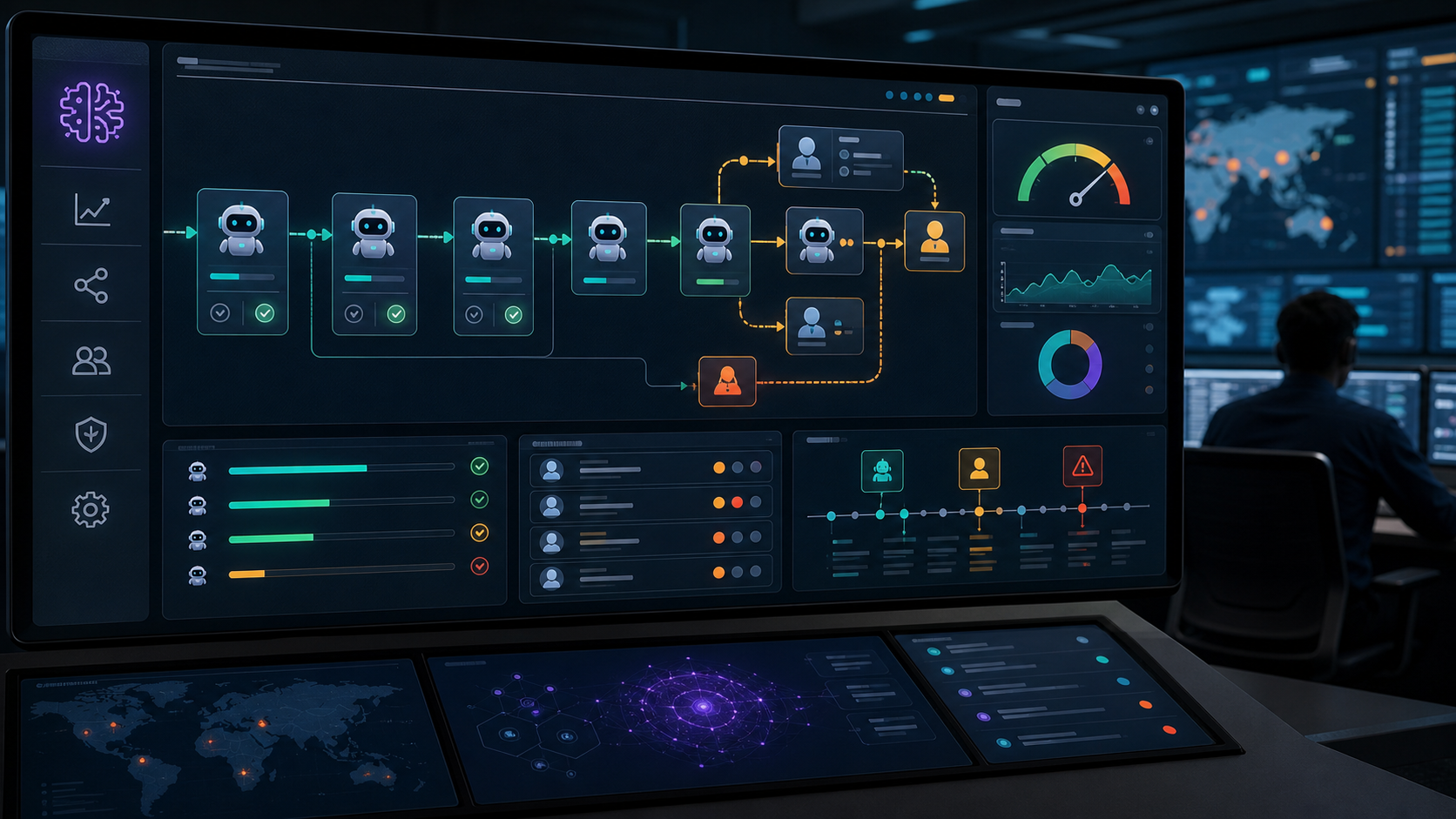
AI agents can execute multi-step workflows, but operations teams need to know when autonomy stops. Monitoring should track task status, confidence, blocked permissions, external effects, and escalation paths.
Handoff rules are especially important when agents touch customers, money, production systems, or compliance-sensitive data.
WHY IT MATTERS
Clear monitoring lets teams benefit from automation without losing control. It also gives operators a queue of decisions that genuinely need human judgement.
The best agent workflows make uncertain states visible instead of hiding them inside a black-box run log.
IMPLEMENTATION CHECKLIST
Define monitoring and handoff before expanding agent permissions.
- Set allowed actions, blocked actions, and approval-required actions.
- Trigger handoff for low confidence, policy conflicts, high value, or customer impact.
- Log prompts, tool calls, inputs, outputs, approvals, and errors.
- Create dashboards for stuck tasks, escalations, and repeated failures.
- Review incidents and tune permissions after each workflow change.
RISKS AND TRADEOFFS
The main risk is silent failure. An agent can complete a task incorrectly unless outputs and downstream effects are monitored.
The tradeoff is autonomy. Restrictive controls reduce speed, but they make agent behavior safer to scale.
BOTTOM LINE
AI agents need visible state, firm permissions, and clear human handoff rules before they run important workflows.